Thursday, February 16, 2012

"We've Come A Long Way, Baby" Part 2

Here's the second part of the album. . .


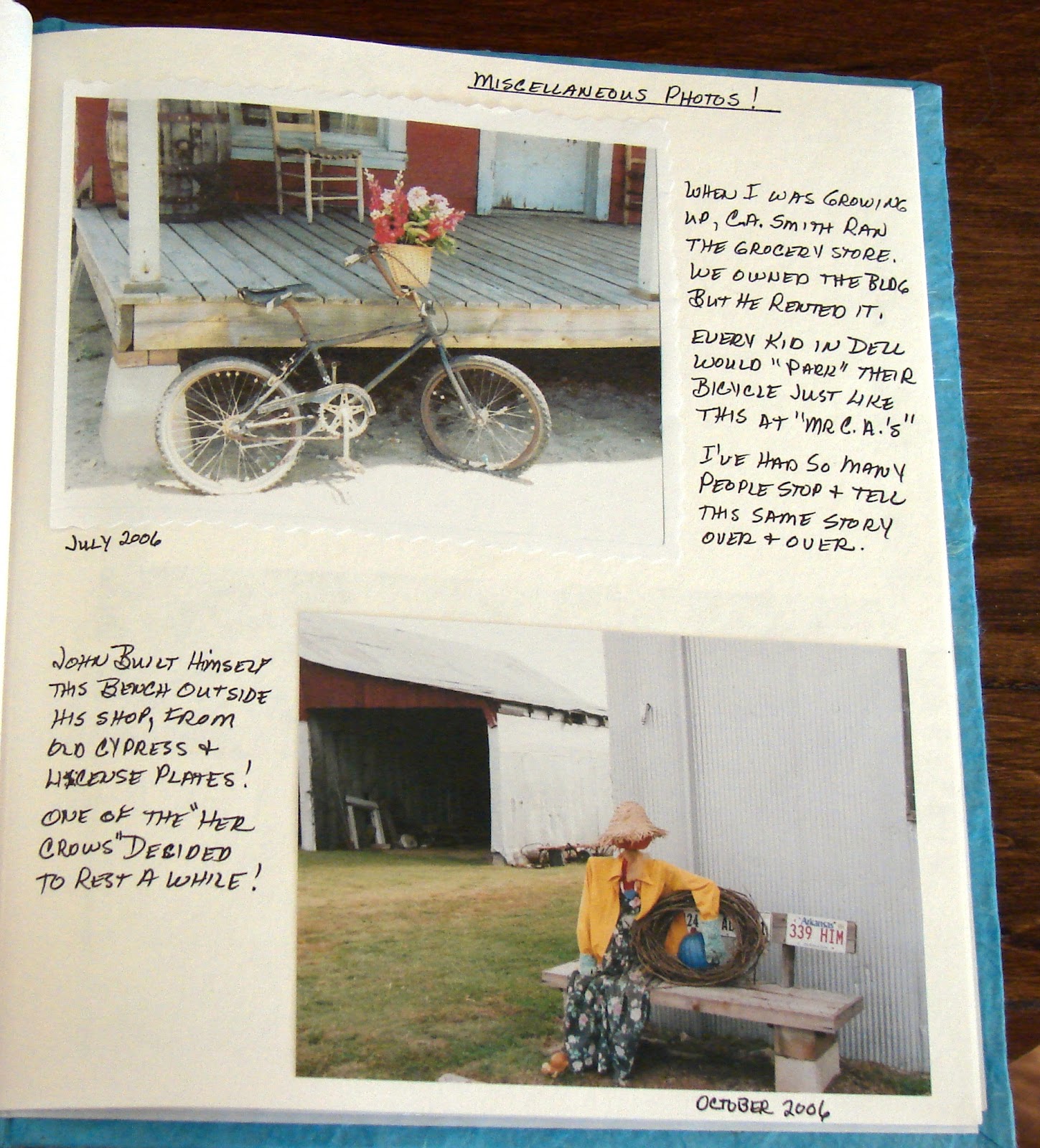
Since 2006, we've not only renovated and restored all the buildings seen here, we've also added three shotgun houses and a log house in progress. Lots of work, but with lots of joy.

Hope you enjoyed the album!
Did it answer some of your questions about the farm?

For current photos of the historic district, click on "Widner-Magers Farm Historic District" in the right hand column.

Wednesday, February 15, 2012

"We've Come A Long Way, Baby" Part 1

This morning, I ran across these photos of an album I made one Christmas for my friend in Oklahoma. It was the year we started serious renovations on the farm house, as well as other buildings in the historic district. I was shocked to see how far we'd come! My goodness we've done a lot in six years!


To be continued. . .in Part 2. . .

For photos of the Country Farm Home interior, click on "The Country Farm Home", December 2011, in the Archives on the right. 

For more current photos of the historic district, click on "Widner-Magers Farm Historic District", also in the right hand column.

Note: The Earl Magers Farm Headquarters Historic District is now the Widner-Magers Farm Historic District.

Monday, February 13, 2012

The Garden Shed: A Touch of Spring Fever


Well, it's 23 degrees outside with the chance of snow, sleet, and freezing rain predicted for tonight.

I don't know about you, but I'm ready for winter to be over. 

Actually, we haven't had a bad winter this year. We've been very blessed to have an average temperature of 50 degrees or more. But, it is February, soon to be March, so my thoughts naturally begin planning ahead when days are longer and much, much warmer.

One of the first tasks for me each spring is cleaning the little garden shed. Dust, dirt, and critters (the small, gray kind) take it over during the winter. Once the weather gets warmer, the critters leave--but the dust and dirt remain.


I admit it. I have a touch of spring fever today.

In anticipation of this year's spring cleaning at the garden shed, 
I began looking through my photos from 2011.

They're a reminder that spring will come again--just hang in there!

I love all things old and natural.

My work table is a found object from the farm shop years ago.
It's very old and shows lots of signs of hard use--
definitely a work bench in it's past. 
It has traveled with me for over 20 years, but it's back home now.

I try to keep tools handy (lower left), as well as  numerous baskets for transporting any and everything.

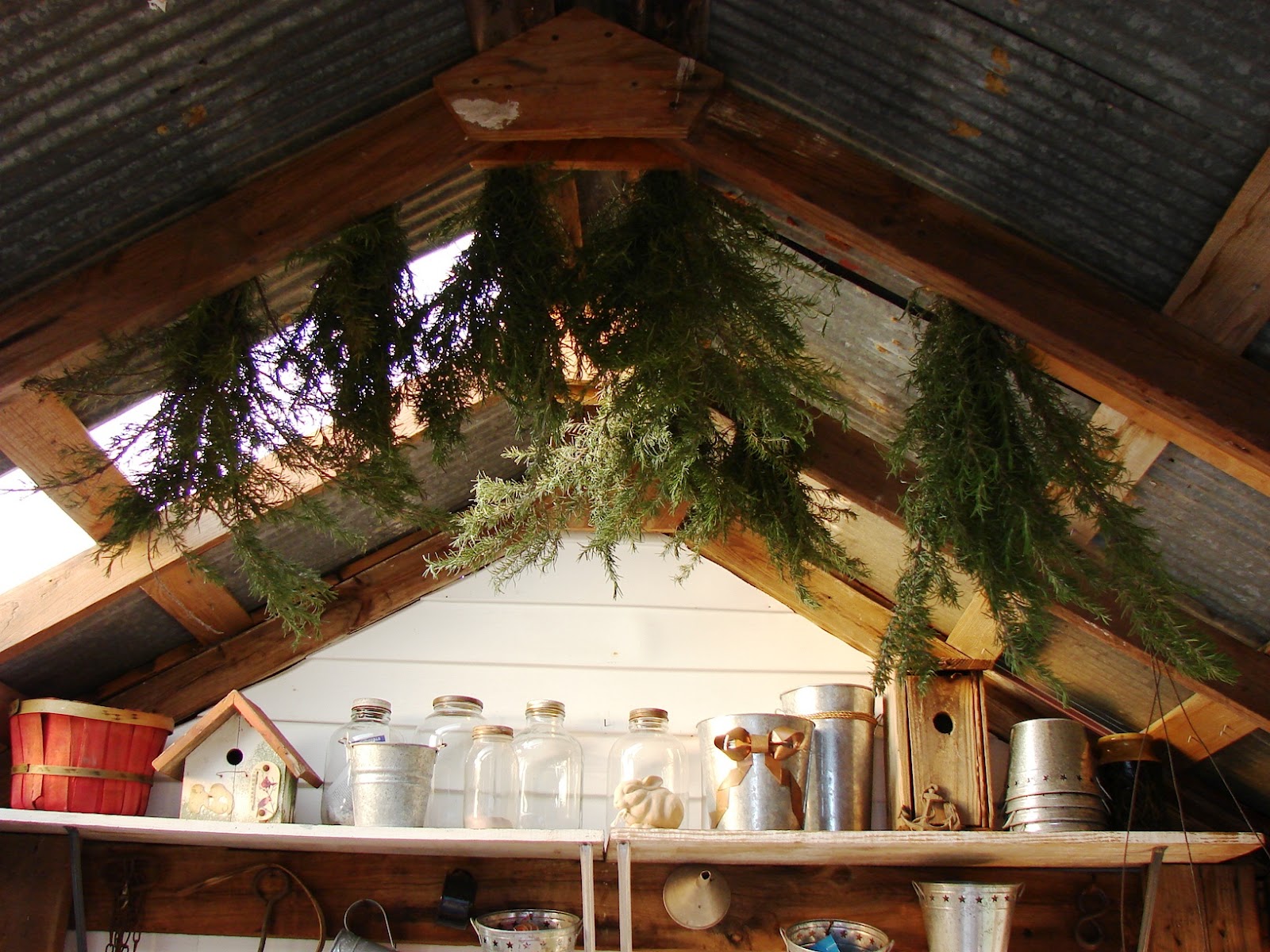
The shelf holds jars, tins, birdhouses, and a basket or two.

I use Aunt Mamie's old canning jars for such things as seeds and  fertilizer.

 The galvanized tins are useful in a number of projects, including dried flower arrangements.

Daddy constructed the blue bird house years ago. 
He had several of them scattered around in their yard in Dell. 
I've placed a few around the farm but have kept the best two inside,
out of the weather.

Another one of Daddy's birdhouses. He had fun with this one.

Rosemary hangs from the ceiling to dry.
Did you know that rosemary symbolizes remembrance?
 

Baskets of every size are close and handy.
This is just a few in my collection.

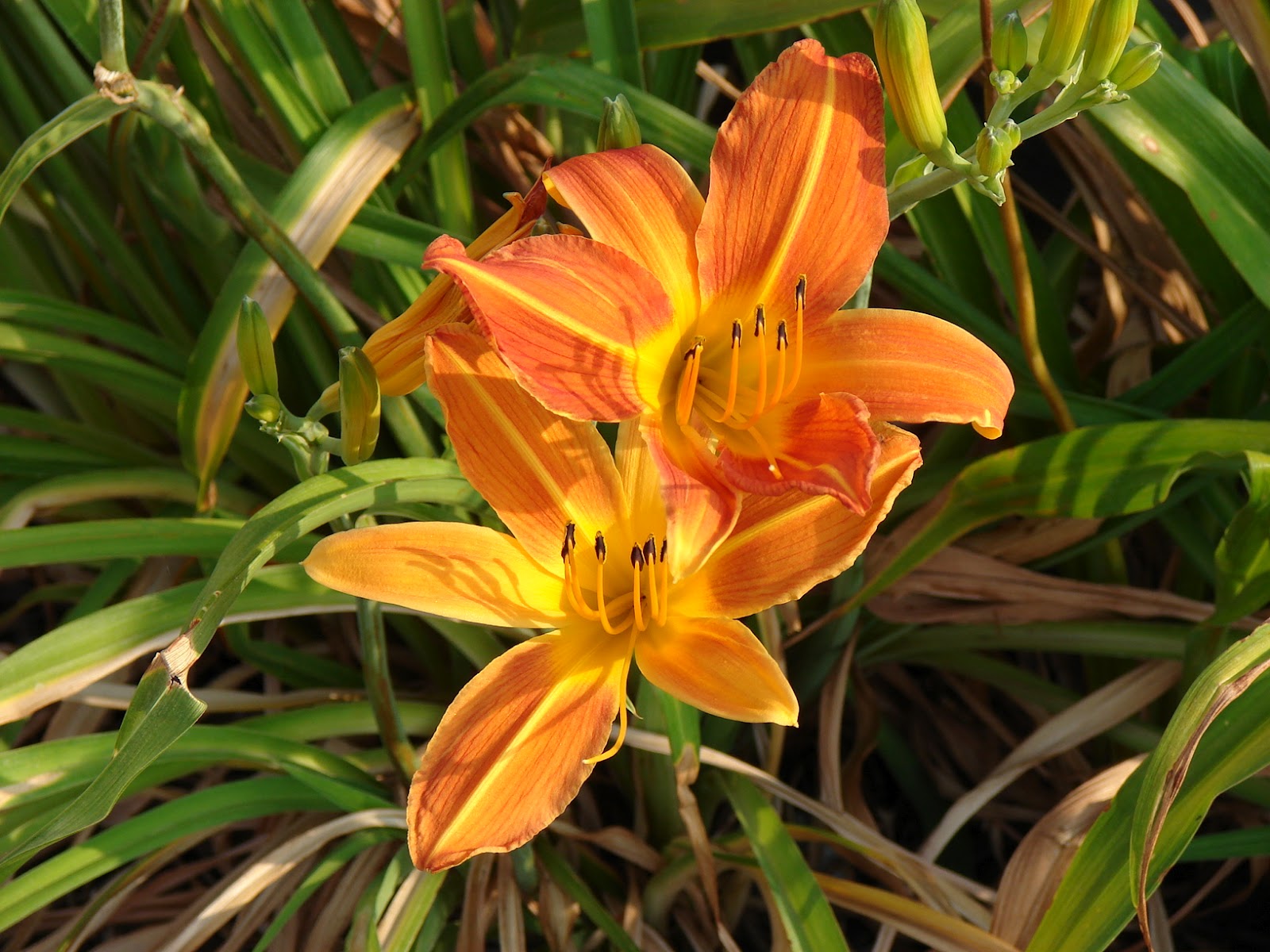
Just had to throw in a couple of lilies that grow
outside the garden house window in the summer.
I told you I had spring fever!

That's the garden shed tour for now. 
Hopefully, it won't be long until I can spend a day 
cleaning and stocking it for this year.
But, first, we have a winter weather watch to get through. . .

Thursday, February 9, 2012

Folk Art Portrays Delta Life


Our home is filled with art from " Cotton Country."  My favorites have always been the work of Gladys Watson, a former Arkansas State Senator from Monette.  She was a dynamic person in many walks of life, but she was best known for her folk art paintings of our Northeast Arkansas Delta history.

I first met Gladys years ago at a church craft fair in Osceola. It was only the first of many encounters with her as we both traveled the craft shows in this state. Unlike most of us who needed trucks and vans to transport our wares, Gladys traveled in her car, packing everything she needed in her back seat and trunk. Her booth consisted of a fold-up table where she displayed her art, a chair to sit in, and a box of paints and brushes to paint items if business was slow. She seemed to know "everyone" and loved them all.


Nan Snider in a Holiday 2011 Delta Crossroads magazine article writes: "Watson often was referred to as the local "Granny Moses" of crafts, ceramics and painted cotton scenes on anything that didn't move. She had a thriving cottage industry called "The Cotton Patch," which was an antique hideaway in her back yard. The 100-year-old shack once was used by the seasonal cotton pickers who came down from the mountains each year. Watson's gourds and other projects remain as valuable forwms of artwork throughout the south. . ."

   
I have loved Gladys's paintings for many years and have finally realized why. Her paintings portray so many familiar memories of my younger days, before tenant houses and barns were razed. The buildings we have saved and renovated here at the farm are much like the ones Gladys loved to paint.  I began looking at the paintings more closely.

Most of Gladys's paintings included one or several of the same elements--a field of cotton, a wooden cart, a shed barn, a log house, tenant houses and tenants doing various tasks, an outhouse, a church, a school.

Now where had I seen these before?


The Cotton Fields. . .


A shed barn. . .


Brownlee Barn, northeast of Dell. 
Razed 2011.


 A Log House. . .


  The log house being reconstructed at our farm.

The Wilson House on the Simmon's Plantation was similar to the log house. Razed long ago.


Tenant Housing. . .
 

Earl Magers/CC Duncan Farm 1951
Built 1930; razed years ago.

 Earl Magers/CC Duncan Farm 1951
Built 1930
Our present home. . .
 and a Tenant House on a country road (right).


The Outhouse at our farm is a carbon copy of the one in the painting. I knew it looked familiar!


Tenants in the field, ca 1930s.
Nowadays, we only see the big machinery.


A  Church. . .


Crossroads Church before it was razed and burned in 2011.


Although Gladys lived in Monette, her artwork focuses on the entire Northeast Arkansas area. 
I'm afraid there are few surviving buildings to attest to that fact. 
So, if you happen to own a piece of Gladys Watson's folk art, 
treasure it.
You own a piece of our local heritage--our Delta history.

If you do own a piece of Gladys Watson's art work, please share it with us in a photo. 
I'd like to document more of her folk art.

Related Posts Plugin for WordPress, Blogger...